State Management
Change the Projector, Not Just the Picture: How Your Internal State Shapes Your Results
External results are often the visible expression of deeper patterns. If you want to create a different outcome, begin by examining the internal state, beliefs and daily inputs influencing your behavior.
Begin Your Day in a More Beautiful State
The way you enter your morning can influence how you experience everything that follows. Create a few quiet moments for clarity, intention and connection before the demands of the day begin.
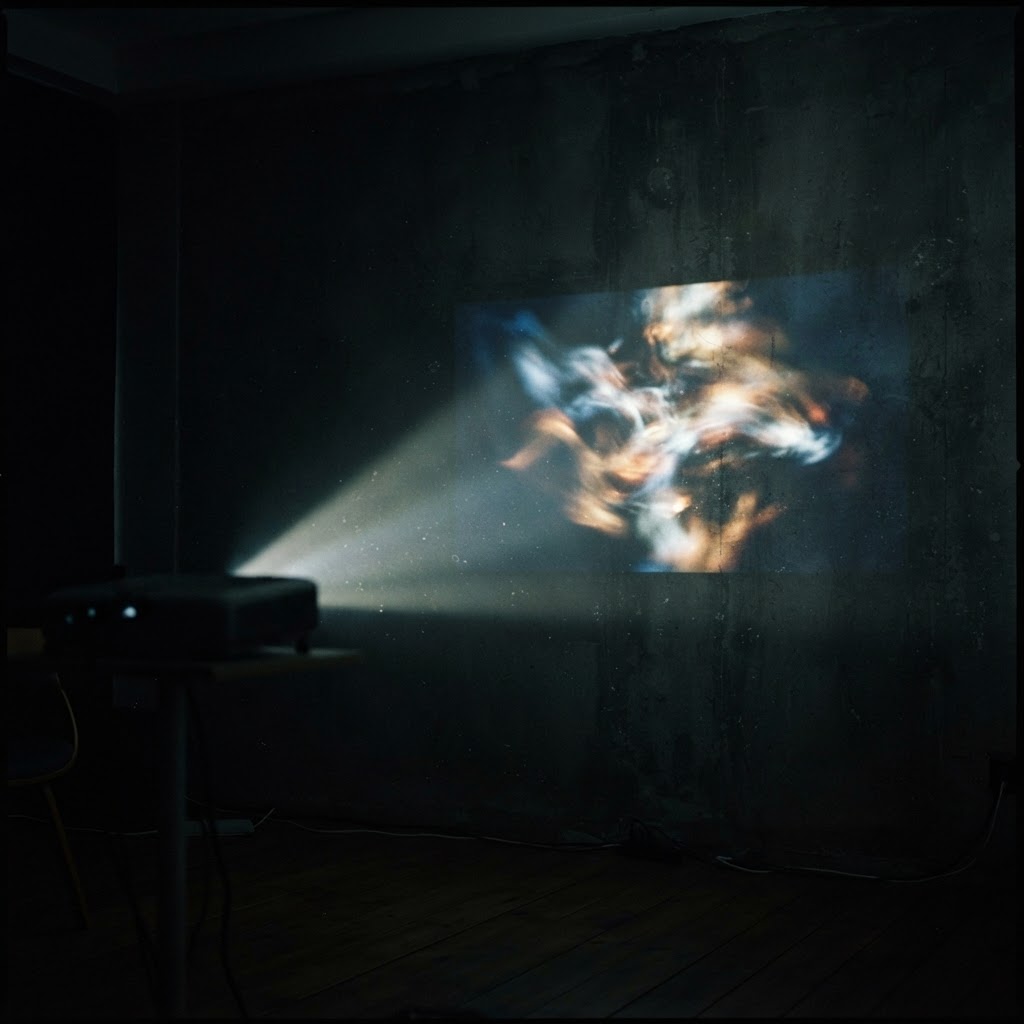
Start the Morning MeditationTrying to change your life by fixing only what you can see can feel like standing in a movie theater and attempting to alter the image directly on the screen.
The picture may be disappointing, unclear or completely different from what you wanted. Your instinct is to focus on the visible result.
But the screen is only displaying what the projector is sending to it.
Changing the image requires examining the source.
This metaphor offers a useful way to think about state management. The circumstances of your life are not imaginary, and they are not always within your control. But many of the results you repeatedly experience are influenced by the internal state, expectations and behavioral patterns you bring into those circumstances.
If you want a different outcome, changing the visible result may not be enough.
You may need to change what you are feeding the system.
What Is Your Internal State?
Your internal state is the combination of thoughts, emotions, physical sensations, expectations and attentional patterns present at a particular moment.
It influences:
- What you notice
- What you overlook
- How you interpret another person’s behavior
- Whether a situation feels threatening or manageable
- How quickly you react
- Which possibilities you can imagine
- How willing you are to trust
- Whether you approach a decision with clarity or fear
- How you communicate
- What action you take next
Your state does not control everything that happens.
It influences how you participate in what happens.
That distinction is important.
State management is not the claim that every difficult circumstance is created by your thoughts. It is the recognition that your internal experience can meaningfully affect your choices, relationships and repeated behavior.
The Screen Is the Result
In the movie metaphor, the screen represents the visible results of your life.
These might include:
- Your work environment
- Your schedule
- Your relationships
- Your financial patterns
- Your communication habits
- Your team’s culture
- Your energy level
- Your boundaries
- Your sense of fulfillment
- The way you respond under pressure
When something on the screen is not working, the natural response is to attempt an external correction.
You reorganize the calendar. You set another goal. You replace the system. You change the strategy. You have another difficult conversation. You work longer. You increase control.
Sometimes those external changes are necessary.
But if the same internal pattern continues operating, a different version of the same result may eventually return.
Why Fixing Only the Result Can Fail
Imagine that you consistently feel overwhelmed by your schedule.
You might download a new calendar application, create color-coded categories or develop a more detailed planning system.
Those tools may help.
But if the underlying pattern is an inability to say no, a fear of disappointing people or a belief that your worth depends on being needed, the calendar will probably become overloaded again.
The visible problem is the schedule.
The deeper input may be the internal state from which you make commitments.
The same pattern can appear in other areas.
In Leadership
The visible problem may be that your team does not take enough ownership.
The deeper pattern may be that anxiety causes you to take decisions back whenever someone approaches them differently.
In Relationships
The visible problem may be repeated conflict.
The deeper pattern may be that you enter difficult conversations expecting rejection, criticism or loss of control.
In Business
The visible problem may be inconsistent growth.
The deeper pattern may involve constantly changing direction because uncertainty feels intolerable.
In Personal Well-Being
The visible problem may be exhaustion.
The deeper pattern may be the belief that rest must be earned through constant productivity.
The purpose of looking deeper is not self-blame.
It is to identify where you have influence.
What Are You Feeding the System?
Your internal state is affected by the inputs you repeatedly receive.
Those inputs include more than food or physical environment. They include everything that regularly occupies your attention.
Consider what you are feeding your system through:
- News and social media
- Email and notifications
- Conversations
- Self-talk
- Sleep and recovery
- Physical movement
- Work expectations
- Relationships
- Information
- Entertainment
- Comparison
- Unresolved conflict
- Your physical surroundings
- The questions you repeatedly ask yourself
If you begin every morning with urgency, comparison and other people’s priorities, those inputs can influence the state from which you enter the day.
If you repeatedly tell yourself that everything depends on you, that belief can shape how you delegate and respond to uncertainty.
If you surround yourself only with conversations about pressure, problems and what is missing, your attention may become trained to find more evidence of those conditions.
The system produces from what it repeatedly receives.
How State Influences What You See
Two people can encounter the same circumstance and experience it differently.
One person may interpret unexpected feedback as useful information.
Another may experience the same feedback as proof that they are failing.
One leader may view an uncertain period as a reason to gather information and create a thoughtful plan.
Another may view uncertainty as a threat requiring immediate control.
The external circumstance matters. But the internal state influences how the circumstance is interpreted.
When you are operating from stress, you may become more likely to notice:
- Potential threats
- What could go wrong
- Evidence that other people cannot be trusted
- Signs that you are falling behind
- Reasons to act immediately
- Problems requiring control
When you are operating from greater connection and clarity, you may become more capable of noticing:
- Additional options
- Useful information
- Opportunities to collaborate
- What is already working
- Where patience is appropriate
- Which issue actually deserves attention
Changing state does not remove the facts.
It can change the range of responses available to you.
Your State Creates Behavioral Momentum
A single internal shift does not magically transform every outcome.
What creates change is the behavior that follows the shift.
Your state influences a decision. That decision produces an action. Repeated actions become patterns. Patterns contribute to results.
The sequence can look like this:
Internal state → interpretation → decision → action → repeated pattern → visible outcome
For example:
Stress → “Everything depends on me” → refusal to delegate → overwork → exhaustion and team dependence
A different sequence might be:
Connection → “I can provide direction without controlling every detail” → appropriate delegation → shared ownership → greater capacity
The outcome is not created by a thought alone.
It develops through the behavior that the thought and state help organize.
Changing State Is Not Avoiding Reality
State management should not be used to deny legitimate problems.
You cannot meditate away a broken agreement, an unhealthy relationship or a serious financial concern. Some circumstances require direct action, professional support, difficult boundaries or major structural change.
The objective is not to pretend that everything is positive.
It is to meet reality from a state that allows you to see it more clearly.
A calm state may help you recognize that a situation is unacceptable.
Connection may help you communicate a stronger boundary.
Clarity may help you stop investing energy in something that is not working.
Changing your state is not an alternative to action.
It can improve the quality of the action you take.
How to Change What You Are Feeding the System
1. Identify the Result You Keep Trying to Fix
Choose one visible outcome that repeatedly frustrates you.
It may involve:
- Your calendar
- Your energy
- A relationship
- Your leadership
- A financial pattern
- Your work habits
- Your ability to rest
- Your sense of direction
Describe the result without immediately attempting to solve it.
2. Look for the Repeated Behavior
Ask:
- What do I repeatedly do that contributes to this result?
- Which decisions keep reproducing the pattern?
- What happens immediately before I make those decisions?
- Where do I already know what to do but struggle to do it consistently?
Focus on behavior rather than character.
The question is not, “What is wrong with me?”
It is, “What pattern keeps operating?”
3. Identify the State Behind the Behavior
Consider what you are feeling or believing when the behavior occurs.
Possibilities include:
- Fear
- Urgency
- Insecurity
- Control
- Scarcity
- Disconnection
- Resentment
- Exhaustion
- The need for approval
- The need to prove yourself
Naming the state helps reveal the source material being sent to the projector.
4. Examine the Inputs Reinforcing That State
Ask what repeatedly strengthens the pattern.
Is it a demanding morning routine? Constant notifications? A lack of sleep? A relationship organized around criticism? Comparison on social media? An environment where everything is treated as urgent?
Look at what you are repeatedly consuming, tolerating and rehearsing.
5. Choose a Different Input
A different input might be:
- Ten quiet minutes before checking your phone
- A clearer boundary
- A more supportive conversation
- Time away from constant news or social media
- A consistent sleep schedule
- A written priority for the day
- Asking for help
- A meditation practice
- Replacing criticism with a more useful question
- Spending time with people who help you think more clearly
Choose something small enough to repeat.
6. Create One Different Response
Ask:
If I approached this situation from clarity rather than stress, what would I do next?
Your answer might involve waiting, asking a question, declining a request, delegating, apologizing, changing direction or doing less.
One different response will not transform every result.
But repeated responses create a different pattern.
7. Observe the New Projection
Pay attention to what changes.
Notice:
- How conversations feel
- Which decisions become easier
- Where resistance remains
- How other people respond
- Whether the same result continues appearing
- Which additional changes may be necessary
Use the outcome as information.
If the picture does not change, examine whether the input or behavior actually changed.
A Five-Minute Projector Reset
Use this practice when you feel trapped in a repeated outcome.
Minute 1: Name the Picture
What external result is frustrating you? Describe it in one sentence.
Minute 2: Identify the Pattern
What repeated behavior may be contributing to it?
Minute 3: Name the State
What feeling, belief or expectation is driving that behavior?
Minute 4: Change the Input
What can you give your internal system instead?
Minute 5: Choose the Next Action
What is one action you can take from the state you want to create?
The purpose is not to blame yourself for the picture.
It is to regain influence over what you are projecting into the next moment.
Reflection Questions
- Which external result do I keep trying to fix?
- What repeated behavior may be contributing to that result?
- What state am I usually in when I repeat that behavior?
- What information, relationships or habits reinforce that state?
- What am I feeding my attention every morning?
- Which belief keeps appearing in my decisions?
- What would I notice differently from a state of greater clarity?
- What is one input I can change today?
- What action would reflect the state I want to create?
- Where do I need external change in addition to internal work?
Frequently Asked Questions
Does your internal state determine everything that happens?
No. External circumstances, other people’s choices and structural conditions all affect outcomes. Your internal state influences how you interpret circumstances, make decisions and respond to what happens.
What does it mean to change your state?
Changing state means intentionally shifting the thoughts, emotions, physical patterns or focus influencing your current behavior. This may involve pausing, breathing, changing your environment, questioning an assumption or choosing a different action.
Is changing your mindset enough to change your life?
Mindset alone is not always enough. Meaningful change usually requires different decisions, repeated behavior and sometimes external support or structural change. A different mindset can help make those actions possible.
How do I identify the pattern behind an unwanted result?
Look for decisions or behaviors that occur repeatedly before the result. Then examine the feelings, beliefs and environmental inputs influencing those behaviors.
What should I do when the external situation really is the problem?
Address it directly. State management should support clear action—not replace it. You may need to establish a boundary, change a system, leave an unhealthy environment or seek appropriate professional assistance.
Video Transcript
"Trying to change your life by fixing what you see? Most people focus on the results without realizing they're just the projection. Your reality is responding to your state—not the other way around. If you want a different outcome, change what you're feeding the system."
Change What You Are Feeding the System
The picture you see is information. Use it to examine the state, inputs and repeated patterns operating beneath the surface.
Explore Soul Sync


Weekly Insights
Subscribe to our weekly insights
Receive thoughtful reflections and practical tools for alignment, stillness, and growth. No noise — only what matters.
Unsubscribe anytime. We respect your privacy.